
Parenting Tip: No-Talk Time Is More Dangerous Than Screen Time: Here’s How It Affects Kids
You’ve probably heard this warning a hundred times: “Reduce your child’s screen time.”
But there’s a quieter danger that doesn’t get talked about enough no-talk time.
It’s not just the hours your child spends on a device. It’s the hours your family spends together… without real conversation. No eye contact. No check-ins. No “How was your day?” that actually turns into a warm talk.
And the scary part? No-talk time can slowly disconnect a child emotionally—even if you live under the same roof.
If you’re reading this and feeling a little guilty, please pause. This isn’t about blame. This is about awareness, and small changes that create big healing.
Many families go through this, and you’re not alone.
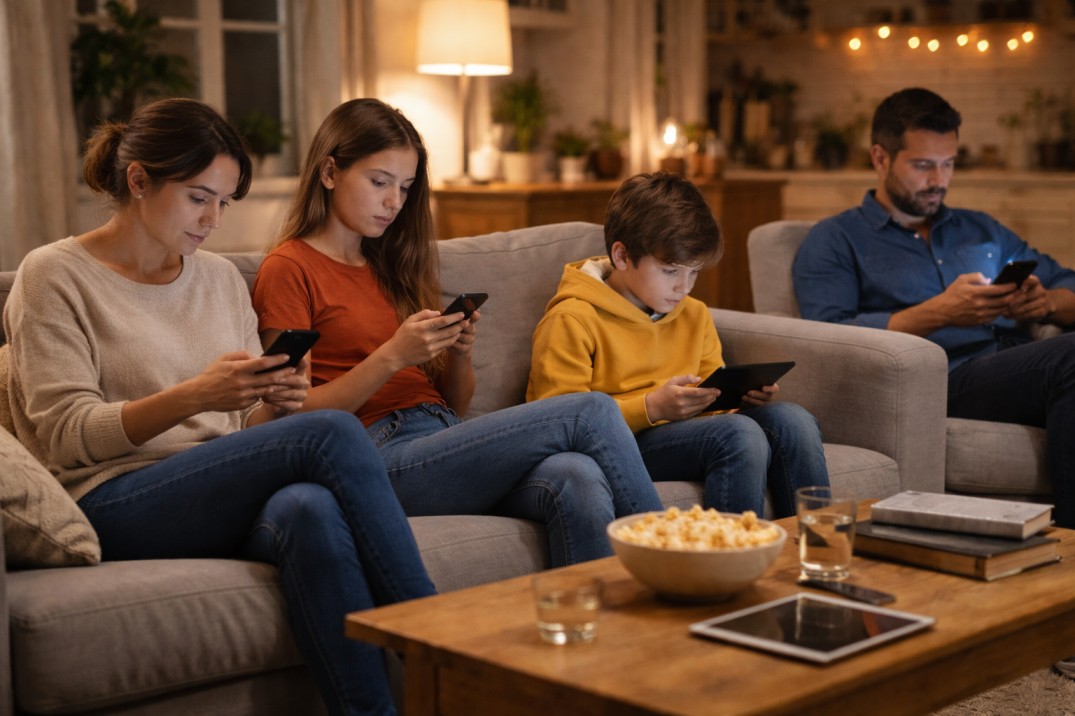
In parenting, small daily conversations often matter more than big rules. No-talk time means the home becomes “functional” but not emotionally connected—everyone is present, but nobody is truly engaging.
Over time, children may feel unheard, emotionally lonely, or less safe sharing their feelings. This can affect confidence, behavior, and family bonding.
The good news: You don’t need long lectures or perfect parenting. Just consistent small talk moments—10 minutes daily can rebuild connection.
What Is “No-Talk Time” in Parenting?
No-talk time is not the same as quiet time.
Quiet time can be healthy—kids need space, and parents need breath. But no-talk time is when silence becomes a lifestyle, not a choice.
It looks like this:
You and your child are in the same room, but both are mentally elsewhere.
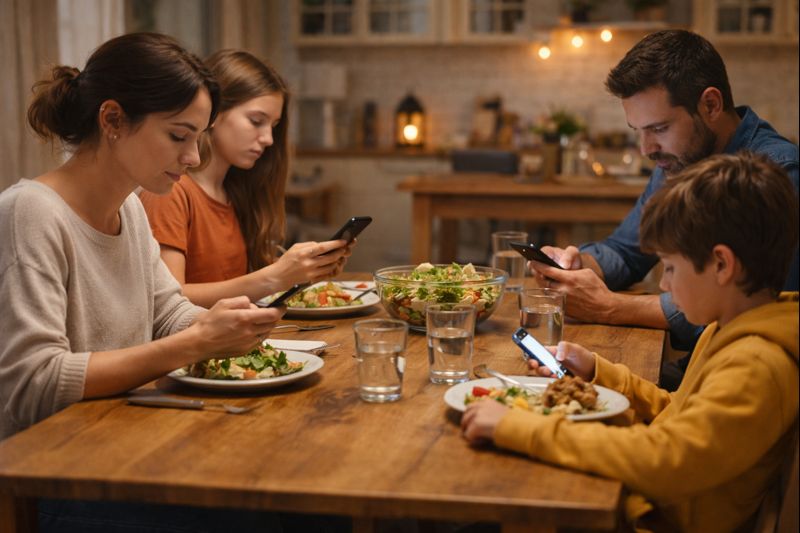
Meals happen, but everyone is distracted.
Questions are answered with one-word replies.
The home runs on instructions, not connection.
In simple words: there is communication, but no emotional conversation.
Why No-Talk Time Can Be More Harmful Than Screen Time
Screen time is visible. You can count it. You can set limits.
But no-talk time is invisible—and that’s why it’s more dangerous. It quietly affects your child’s emotional development.
When kids don’t get daily conversation with parents, they lose:
- a safe place to express feelings
- emotional vocabulary (how to name what they feel)
- confidence that they matter
- the habit of sharing their inner world
And here’s the painful truth:
A child who doesn’t talk to parents will eventually talk less… and then stop trying.

The Emotional Effects of No-Talk Time on Children
Children may not say “I feel disconnected.” They show it in other ways.
They stop sharing their life
You may notice your child answers everything with:
“Nothing.”
“Fine.”
“Okay.”
It doesn’t always mean attitude. Sometimes it means they’ve learned:
“Talking doesn’t lead anywhere.”
More mood swings and irritability
Kids often act out when they can’t express emotions properly.
Not because they are “bad,” but because their feelings have nowhere to go.
Low confidence and people-pleasing
Children build confidence when they feel heard and understood.
Without talk time, they may become overly quiet, overly obedient, or overly anxious—trying to “stay safe” emotionally.
Stronger attachment to screens or friends
When connection is missing at home, kids naturally search for it elsewhere.
Sometimes that becomes:
- excessive screen attachment
- dependence on online validation
- unhealthy friendships just to feel seen
A Relatable Scenario (You Might Recognize This)
Imagine this:
Your child comes home from school. You’re tired too.
You ask, “How was school?”
They say, “Good.”
You nod. You check your phone.
They go to their room.
You start dinner.
Nothing dramatic happens. No shouting. No fight.
But slowly, day after day, the child learns:
Home is not a place where feelings are shared.
And one day, when something serious happens—bullying, stress, fear, heartbreak—your child doesn’t come to you.
Not because you’re a bad parent.
But because talking was never practiced.
Signs Your Family Is Stuck in No-Talk Time
If you notice 3–4 of these regularly, it may be time to reset:
- Most conversations are only about studies, chores, or rules
- Family members eat separately or silently
- Everyone uses screens during meals
- Your child shares more with friends than with you
- You feel like you “don’t know what’s going on” in their mind
- There is love at home, but not enough connection
How to Reduce No-Talk Time (Without Forcing Conversations)
This is important: Don’t try to “fix” it in one day.
Kids don’t open up under pressure. They open up under safety.
Start with micro-moments
Instead of long lectures, create small daily talk windows.
Try:
- 5 minutes after school
- 10 minutes before bed
- 7 minutes during a snack
The goal is not deep talk. The goal is consistency.
Use “soft questions” (not interrogation)
Avoid:
“What did you do?”
“Why didn’t you tell me?”
“Who was there?”
Try:
“What was the best part of your day?”
“Did anything feel annoying today?”
“Tell me one funny thing that happened.”
Speak about your day too
Kids feel safe when parents are human.
Say:
“Today I felt tired, but I’m happy we’re together now.”
“I had a stressful moment at work, but I handled it.”
This teaches emotional language naturally.
Make one daily “connection ritual”
Simple rituals create emotional security.
Examples:
- bedtime talk + hug
- evening walk
- tea/snack time together
- “High-Low” routine (High point + Low point of the day)
Common Mistakes to Avoid
Forcing your child to talk
Kids shut down when they feel pressured.
Instead of: “Talk to me now!”
Try: “I’m here whenever you feel like sharing.”
Correcting emotions too quickly
If your child says: “I hate school.”
Avoid: “Don’t say that.”
Try: “That sounds heavy. What happened today?”
Only talking when something goes wrong
If conversations happen only during scolding, children associate talking with danger.
Build talk time in normal moments too.
Turning every talk into advice
Sometimes your child needs listening, not solutions.
A powerful sentence:
“Do you want advice, or do you just want me to listen?”
Screen Time vs Talk Time: What Balance Actually Works?
This is not an anti-screen article.
Screens are part of modern life. But the best parenting rule is this:
Connection comes first. Screens come second.
If your child gets daily talk time, they naturally handle screen time better too—because they feel emotionally full.
You can also explore healthy parenting habits on our Parenting pillar page: Parenting.
And if you want a deeper guide on emotional closeness, read: how to build strong parent-child bonding.
What Experts Say About Parent-Child Communication
Research consistently shows that warm, responsive parent-child communication supports emotional well-being and resilience.
UNICEF also highlights the importance of responsive parenting and communication in child development and mental well-being.
A Gentle 7-Day “Talk Time” Plan (Simple & Realistic)
You don’t need perfection. Just progress.
Day 1: 5 minutes of no-phone talk
Day 2: Share one childhood story
Day 3: Ask “What made you smile today?”
Day 4: Cook/eat together without screens
Day 5: Evening walk + casual chat
Day 6: Let child choose a topic
Day 7: “I’m proud of you because…” conversation
Small steps. Big impact.
FAQ Section
Q1. What does “no-talk time” mean in parenting?
A: No-talk time means spending time together at home without real emotional conversation—only routines, instructions, or silence.
Q2. Is no-talk time really worse than screen time?
A: It can be, because it slowly reduces emotional connection. Screen time is manageable with limits, but no-talk time can create long-term distance.
Q3. What are signs my child is emotionally disconnected?
A: One-word answers, avoiding family time, irritability, staying in their room, and sharing everything with friends but nothing with parents.
Q4. How can I rebuild talk time with my child?
A: Start small—5–10 minutes daily, ask soft questions, listen without interrupting, and create a daily connection ritual like bedtime talk.
Q5. What if my child refuses to talk?
A: Don’t force it. Stay consistent, keep the environment safe, and show warmth. Children open up when they feel heard, not pressured.
Q6. How much talk time is enough for kids?
A: Even 10 minutes of distraction-free daily conversation can make a strong difference, especially when it happens consistently.
Q7. Can talk time reduce screen addiction?
A: It can help. When kids feel emotionally connected, they rely less on screens for comfort, attention, or escape.