

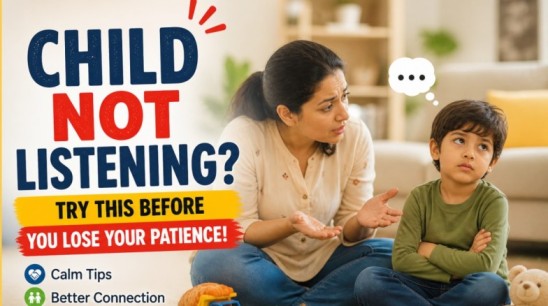
Child Not Listening? Try This Before You Lose Your Patience!
You call your child once… twice… maybe even five times.
And still—no response.
That moment when your patience starts slipping? Almost every parent has been there. If your child not listening feels like a daily struggle, you’re not alone. Many families go through this, and you’re not alone.
What if the problem isn’t just about “obedience”? What if it’s about connection, communication, and timing?
Let’s explore what’s really going on—and what you can do about it calmly and effectively.
Why Children Stop Listening
Children are not naturally wired to ignore parents. But there are reasons why they may seem to “tune out.”
Overstimulation and Distraction
In today’s fast-paced world, children are surrounded by screens, noise, and constant stimulation. When they’re deeply engaged in something, your voice may simply not register immediately.
Emotional Needs Not Met
Sometimes, not listening is a silent signal. A child may be tired, overwhelmed, or seeking attention in indirect ways.
Too Many Instructions
If children hear constant instructions, they may begin to filter them out. It’s not defiance—it’s overload.
According to experts at the UNICEF parenting guide on discipline, children respond better to calm, consistent communication rather than repeated commands.
What to Try Before You Lose Your Patience
Before raising your voice, try these small but powerful shifts.
Get on Their Level
Instead of shouting from across the room, walk closer. Sit or kneel at their eye level. This small act builds connection instantly.
Use Their Name First
Say their name gently before giving instructions. It helps grab attention without pressure.
Give Clear and Simple Instructions
Instead of saying, “Clean everything now,” try:
“Please put your toys in the box.”
Clarity reduces confusion.
Pause and Wait
After giving an instruction, pause for a few seconds. Children often need processing time.
The Power of Connection Over Control
One evening, a parent kept calling their child for dinner. No response. Frustration built up.
Instead of yelling, they walked in, placed a hand on the child’s shoulder, and said softly, “Dinner is ready, let’s go together.”
The child responded immediately.
Why? Because connection replaced command.
Parenting is less about control and more about relationship. When children feel seen and heard, they’re more likely to listen.
You can explore more gentle parenting strategies in our family wellness parenting guide [Learning & Growth] to build stronger emotional bonds at home.
Common Mistakes to Avoid
Even well-meaning parents can fall into patterns that reduce listening.
Repeating Instructions Too Often
Repeating again and again teaches children they don’t need to respond the first time.
Using a Harsh Tone
A loud or angry tone may create fear, not understanding.
Giving Instructions Without Attention
If your child is focused elsewhere, instructions may go unheard.
Expecting Instant Obedience
Children are still learning self-control. Immediate response isn’t always realistic.
Recognizing these patterns is the first step toward change.
Simple Daily Habits That Improve Listening
Small habits can create big shifts over time.
Create Routine Signals
Use consistent cues like “5 minutes left” before transitions. This prepares children mentally.
Offer Choices
Instead of commands, give options:
“Do you want to clean up now or after 5 minutes?”
Choices create a sense of control.
Appreciate Small Efforts
When your child listens, acknowledge it:
“Thank you for coming when I called.”
Positive reinforcement builds cooperation.
Stay Consistent
Consistency helps children understand expectations clearly.
If you’re also dealing with behavior challenges, our [how to handle child behavior calmly] guide offers deeper insights.
When Not Listening Is a Bigger Signal
Sometimes, not listening may reflect something deeper.
It could be:
- Emotional stress
- Changes in routine
- Need for more attention
The guide on parent-child communication emphasizes that listening goes both ways—children respond better when they feel heard.
Take a moment to observe patterns rather than reacting instantly.
A Calm Approach That Builds Lifelong Skills
Think of listening as a skill your child is learning—not a rule they are breaking.
When you stay calm, consistent, and connected, you’re teaching:
- Respectful communication
- Emotional regulation
- Trust
These are lifelong skills, not just short-term obedience.
And yes, there will still be difficult days. That’s part of parenting.
But every small, mindful response adds up.
Final Thoughts
If your child is not listening, it doesn’t mean you’re failing as a parent. It simply means something needs to shift—often in how communication happens.
Pause. Connect. Simplify.
Because sometimes, the most powerful parenting tool isn’t a louder voice…
…it’s a calmer one.
FAQs
Q1. Why is my child not listening to me?
A: Children may not listen due to distraction, emotional needs, unclear instructions, or overstimulation. It’s often not intentional disobedience.
Q2. How can I make my child listen without yelling?
A: Use calm communication, eye contact, simple instructions, and consistent routines to improve listening.
Q3. Is it normal for children to ignore parents?
A: Yes, it’s common. Children are still developing attention and self-control skills.
Q4. Should I repeat instructions if my child doesn’t listen?
A: Avoid repeating too often. Instead, ensure attention first and give clear, calm directions.
Q5. How do I stay calm when my child doesn’t listen?
A: Pause, take a breath, and respond instead of reacting. Focus on connection rather than control.
Q6. When should I be concerned about listening issues?
A: If it’s persistent and affects daily functioning, consider observing patterns or seeking professional guidance.
Q7. Can positive reinforcement improve listening?
A: Yes, acknowledging and appreciating when your child listens encourages repeated positive behavior.