
Are You a Toxic Parent? 10 Warning Signs
Have you ever walked away from a conversation with your child and felt a quiet ache in your chest?
Maybe you raised your voice. Maybe you dismissed their feelings. Maybe you thought, “That’s just how parenting works.” And yet, something didn’t sit right.
If you’ve ever wondered whether you might be a toxic parent, this article is not here to judge you. It’s here to gently help you reflect. Many families go through this, and you’re not alone.
Parenting is deeply emotional. Most harmful patterns are not born from cruelty — they grow from stress, fear, and inherited habits. Awareness is the first step toward change.
What Does “Toxic Parent” Really Mean?
The phrase “toxic parent” doesn’t mean a bad person. It describes repeated behaviors that emotionally harm a child’s confidence, security, or sense of self.
According to the American Psychological Association’s parenting guidance, supportive parenting involves warmth, consistency, and emotional responsiveness. When those elements are regularly missing, children may struggle with self-esteem or anxiety.
Let’s explore some warning signs — not to shame, but to guide growth.
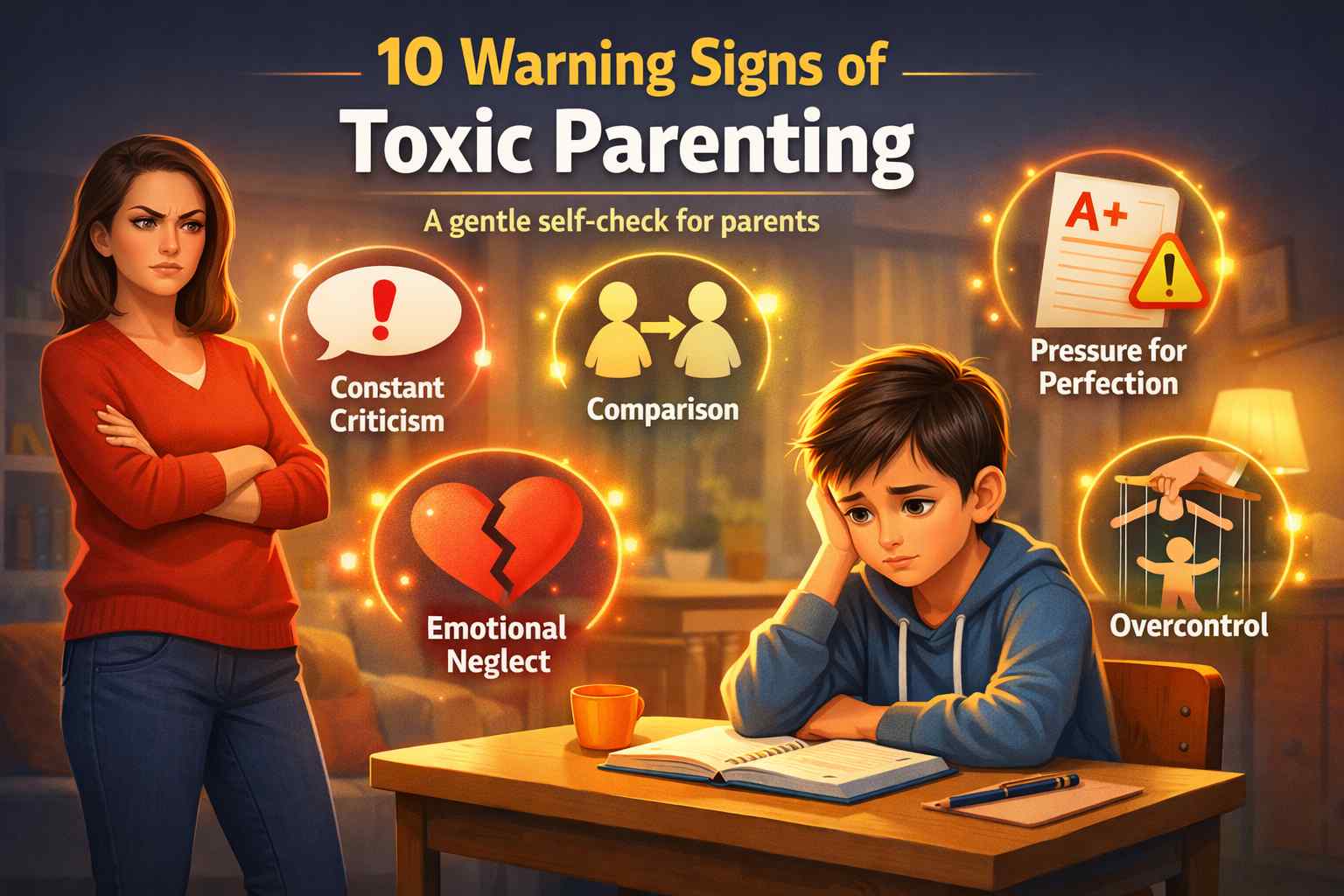
10 Warning Signs to Check Today
1. You Criticize More Than You Encourage
Constructive feedback is healthy. Constant criticism is not.
If your child hears “not good enough” more often than “I’m proud of you,” they may begin to believe they are never enough.
Try noticing your ratio. Are you affirming effort, not just outcomes?
2. You Dismiss Their Feelings
When a child says, “I’m sad,” and the response is, “Stop overreacting,” they learn that emotions are inconvenient.
Emotional validation doesn’t mean agreeing. It means acknowledging: “I see that you’re upset.”
The UNICEF parenting resources emphasize that listening builds emotional safety — one of the strongest foundations of resilience.
3. You Use Fear to Control Behavior
“If you don’t do this, I’ll leave you here.”
Threat-based discipline may create short-term obedience but long-term insecurity.
Children behave better when they feel safe, not scared.
4. You Struggle to Apologize
Many parents grew up believing authority should never bend.
But apologizing to your child doesn’t weaken your position — it models accountability. Saying, “I was wrong to shout. I’m sorry,” teaches emotional maturity.
5. You Expect Perfection
High standards can motivate. Perfectionism suffocates.
If mistakes feel like disasters in your home, your child may stop trying new things altogether.
6. You Compare Them Constantly
“Look at your cousin.”
Comparison chips away at individuality. Each child grows at a different pace — academically, socially, emotionally.
7. You Make Love Feel Conditional
“If you behave, I’ll love you.”
Love tied to performance creates deep insecurity. Healthy parenting separates behavior correction from emotional connection.
8. You Control Every Decision
If you often wonder whether you’re crossing into overcontrol, you may relate to patterns described in Are You a Helicopter Parent? 7 Signs You Might Be Overdoing It.
Children need guidance — but they also need space to develop decision-making skills.
9. You Project Your Unfulfilled Dreams
It’s natural to want your child to succeed. But when their path becomes a replacement for your unfinished goals, pressure replaces partnership.
Ask gently: “Is this their dream or mine?”
10. You Rarely Express Warmth
Do you hug often? Smile often? Listen without distraction?
Emotional warmth doesn’t require grand gestures. It lives in small, consistent moments.
If you sometimes fear you’re failing entirely, you may find reassurance in Terrible Parent Signs of a Good Parent — because self-reflection itself is a powerful sign of care.
A Small Story From Real Life
A father once told me he believed strictness built strength. He corrected every small mistake his daughter made — homework, posture, tone.
One evening she asked quietly, “Is there anything I do that you like?”
That question changed everything.
He didn’t intend harm. He thought he was preparing her for the world. But he learned that preparation without affection feels like rejection.
Growth began not with guilt — but with awareness.
Common Mistakes to Avoid
One common mistake is labeling yourself too quickly.
Self-awareness is healthy. Self-condemnation is not.
Another mistake is swinging to the opposite extreme — from strict to permissive overnight. Children need steady consistency, not sudden shifts.
And perhaps the most overlooked mistake is ignoring your own emotional health. Parenting from exhaustion or unresolved hurt often leads to reactive patterns. Healing yourself supports your child.
Practical Steps Toward Healthier Parenting
Start small.
Pause before reacting. Ask, “What is my child feeling right now?”
Replace one criticism a day with encouragement.
Create a weekly ritual — a walk, a shared meal, 15 minutes of undistracted conversation.
Explore balanced emotional approaches like those discussed in Yin and Yang Energy in Parenting, where firmness and softness coexist.
You don’t need to become perfect. You need to become present.
Why Reflection Is a Strength
Healthy parenting is not about never making mistakes. It’s about repairing them.
Children don’t need flawless parents. They need emotionally safe ones.
When parents grow, families transform.
And growth is exactly what this journey — and our broader Learning & Growth philosophy — is about.
If you’re asking yourself hard questions today, that alone speaks volumes about your love.
FAQs
Q1: What is a toxic parent?
A toxic parent is someone who repeatedly uses behaviors that harm a child’s emotional well-being, such as constant criticism, emotional neglect, or fear-based control.
Q2: Can a loving parent still show toxic behaviors?
Yes. Many harmful patterns come from stress or learned habits, not lack of love. Awareness and willingness to change make a big difference.
Q3: How do I know if I am emotionally harming my child?
If your child seems anxious, withdrawn, fearful of mistakes, or hesitant to express feelings, it may be worth reflecting on communication patterns.
Q4: Can toxic parenting patterns be changed?
Absolutely. With reflection, emotional regulation, and consistent effort, parenting habits can evolve in healthier directions.
Q5: Is being strict the same as being toxic?
No. Structure and discipline are healthy when combined with warmth and respect. Toxicity comes from repeated emotional harm, not reasonable boundaries.
Q6: Should I seek professional help if I’m concerned?
If patterns feel difficult to change or family conflict feels overwhelming, consulting a licensed mental health professional can provide support and guidance.