

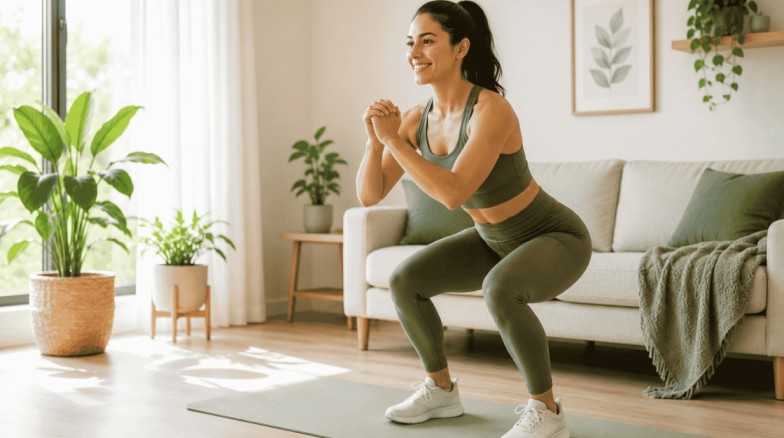
15-Minute Home Workout for Beginners
Have you ever promised yourself you would start exercising, only to feel overwhelmed by complicated workout plans and long gym sessions?
You’re not alone.
Many people want to become more active, but busy schedules, lack of equipment, or uncertainty about where to start often get in the way. The truth is that fitness doesn’t have to begin with intense workouts or expensive memberships.
Many families go through this, and you’re not alone.
When I first started prioritizing movement during busy weeks, I realized something important: consistency mattered far more than perfection. A short workout done regularly often felt more sustainable than ambitious plans that were difficult to maintain.
That’s why a 15-minute home workout for beginners can be such a powerful starting point. It removes common barriers and makes healthy movement accessible to almost anyone.
If you’re building healthier habits overall, visit our Health Wellness Hub for more practical wellness guidance.
Why Short Workouts Can Be Effective
One of the biggest misconceptions about fitness is that every workout needs to last an hour.
In reality, movement adds up over time. Short sessions can help improve energy levels, support mobility, and encourage consistency.
According to the Physical Activity Guidelines for Americans regular physical activity contributes to overall health and well-being.
The goal isn’t to become an athlete overnight. The goal is to create a routine that fits your life.
Benefits of a 15-Minute Home Workout
A short workout offers several advantages for beginners.
First, it feels manageable. Most people can find 15 minutes in their day.
Second, it requires little or no equipment.
Third, it helps build confidence. Small wins create momentum.
Finally, regular movement can support physical and mental well-being while helping establish healthy daily habits.
If you’ve recently started focusing on wellness, our article How to Create a Healthy Morning Routine can help you build healthy habits that support an active lifestyle.
Before You Begin
Listen to your body and move at a pace that feels comfortable.
Wear comfortable clothing and choose a safe space with enough room to move freely.
Keep a bottle of water nearby and remember that modifying exercises is perfectly acceptable.
Progress looks different for everyone.
The 15-Minute Home Workout for Beginners
This beginner-friendly workout requires no equipment.
Aim for controlled movements rather than speed.
Warm-Up (3 Minutes)
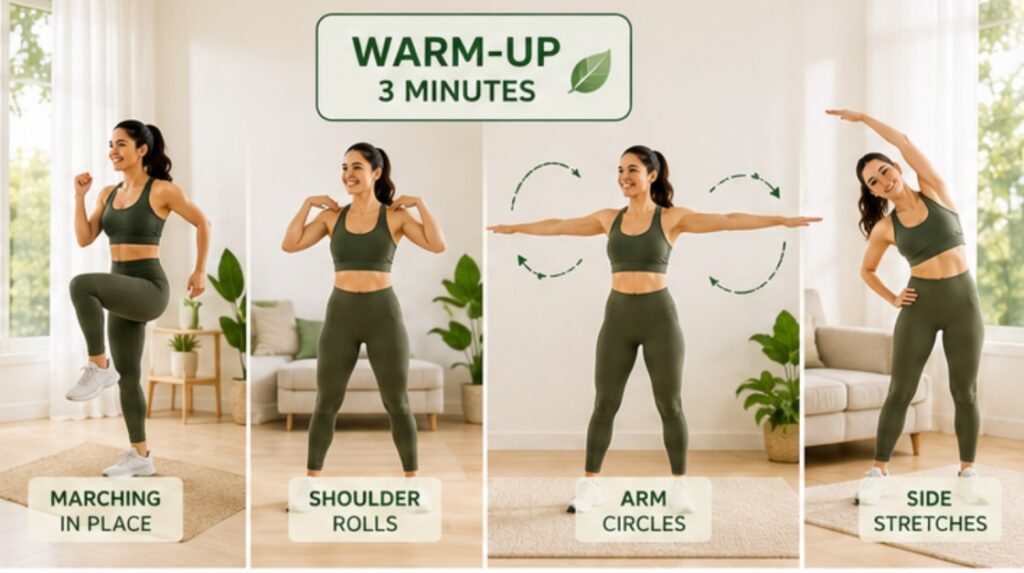
Before exercising, spend a few minutes preparing your body.
Try:
- Marching in place
- Shoulder rolls
- Arm circles
- Gentle side stretches
The goal is simply to increase movement and prepare your muscles.
Main Workout (10 Minutes)
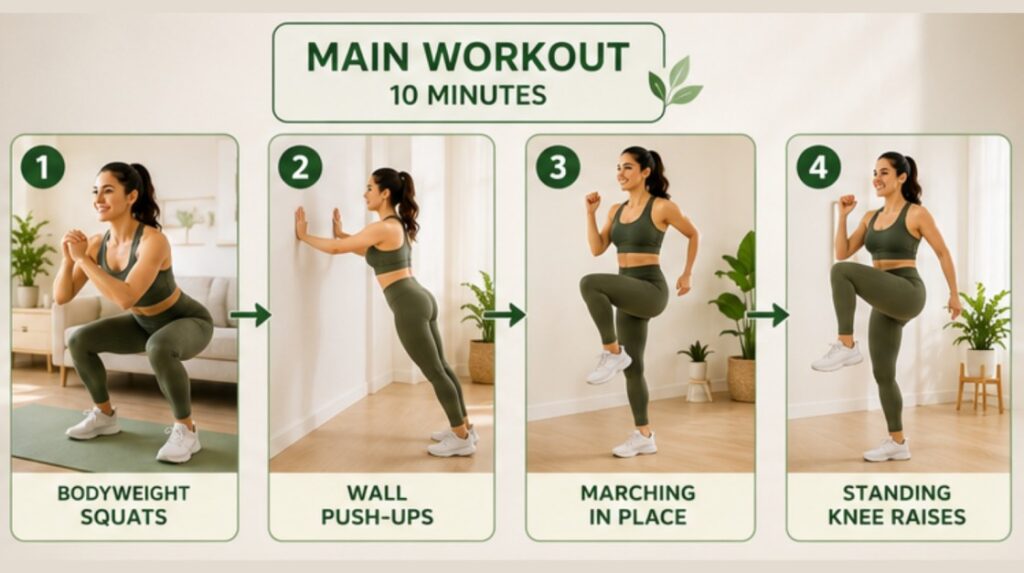
Perform each exercise for 45 seconds followed by 15 seconds of rest.
Complete two rounds.
Bodyweight Squats
Squats help strengthen the legs and lower body.
Stand with feet shoulder-width apart.
Lower yourself as if sitting into a chair, then return to standing.
Move slowly and comfortably.
Wall Push-Ups
Wall push-ups are beginner-friendly and help build upper-body strength.
Stand facing a wall and place your hands against it.
Slowly lower your chest toward the wall before pushing back.
Marching in Place
This simple movement raises your heart rate without putting excessive stress on the body.
Lift your knees comfortably and swing your arms naturally.
Glute Bridges
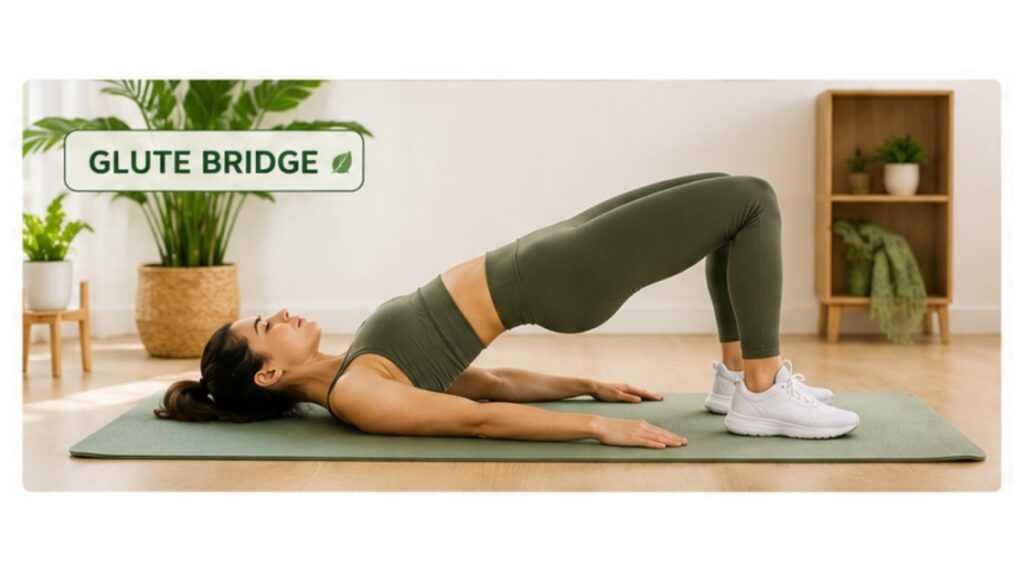
Lie on your back with knees bent.
Lift your hips gently toward the ceiling, then lower slowly.
This exercise supports the lower body and core.
Standing Knee Raises
Raise one knee toward your chest, then alternate sides.
Focus on balance and controlled movement.
Cool Down (2 Minutes)
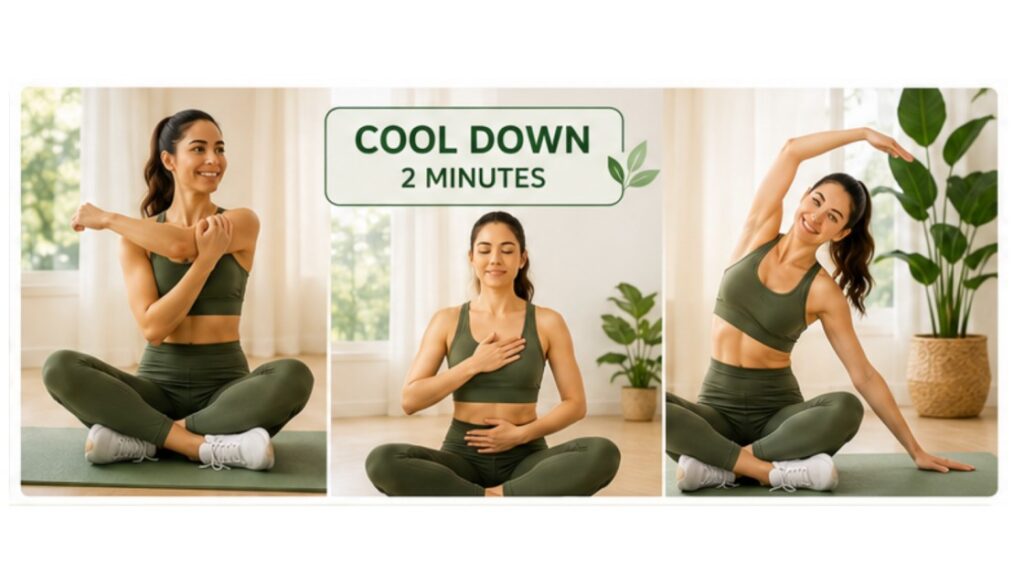
After the workout, spend a few minutes slowing down.
Try gentle stretching for:
- Legs
- Arms
- Shoulders
- Back
Take slow, steady breaths.
Cooling down helps your body transition back to a resting state.
How to Stay Consistent
Consistency is often the biggest challenge when starting a fitness routine.
Instead of focusing on motivation alone, focus on creating systems.
Schedule your workout at the same time each day.
Lay out your workout clothes ahead of time.
Track your progress in a simple notebook or app.
Celebrate showing up, even when the workout isn’t perfect.
The habit of exercising is often more important than any single workout session.
Common Mistakes to Avoid
Many beginners unknowingly make their fitness journey harder than necessary.
One common mistake is trying to do too much too soon. Starting with intense workouts can lead to frustration and burnout.
Another mistake is comparing yourself to others. Your fitness journey is unique.
Some people also skip warm-ups and cool-downs, which can make exercise feel less comfortable.
Finally, don’t underestimate the value of consistency. A 15-minute workout performed regularly can be more beneficial than occasional intense sessions.
Making Fitness Part of Daily Life
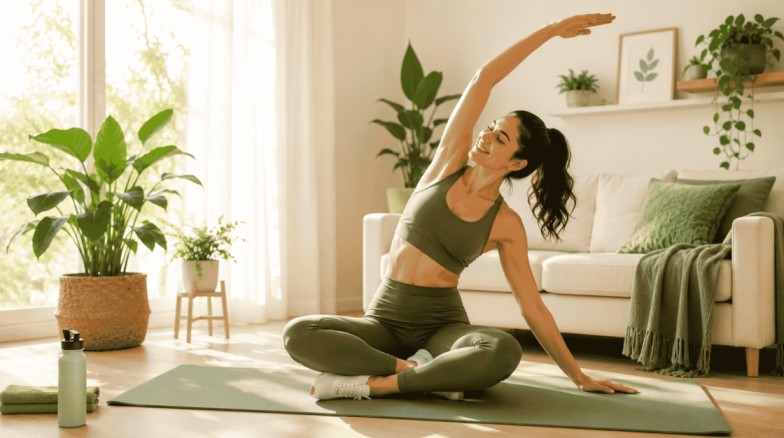
Exercise doesn’t have to exist separately from the rest of your day.
Consider ways to move more naturally:
Take short walking breaks.
Use stairs when possible.
Stretch while watching television.
Walk during phone calls.
Small moments of movement add up.
If you’re also working on improving your nutrition, our article 10 Simple Healthy Eating Habits for Beginners offers practical strategies that complement an active lifestyle.
When Progress Feels Slow
Many people expect immediate results.
The reality is that healthy habits often develop gradually.
Instead of focusing only on outcomes, pay attention to other signs of progress.
You may notice:
- More energy
- Improved mood
- Better confidence
- Increased consistency
- Greater comfort with movement
These changes matter.
Fitness is not about being perfect. It’s about becoming a little stronger, healthier, and more confident over time.
Final Thoughts
Starting a fitness journey doesn’t require expensive equipment, complicated routines, or hours of exercise.
A simple 15-minute home workout for beginners can be enough to build momentum and develop healthy habits.
Remember that progress is rarely dramatic at first.
What matters most is showing up consistently.
Start where you are.
Move in ways that feel comfortable.
Celebrate small victories.
Over time, those small steps can become lasting habits that support your overall well-being.
FAQs
Q1. Is a 15-minute home workout enough for beginners?
Yes. A 15-minute workout can be a practical starting point for building consistency and healthy fitness habits.
Q2. Do I need equipment for this workout?
No. This beginner workout uses bodyweight exercises and requires no special equipment.
Q3. How many times per week should beginners exercise?
Many beginners start with three to five sessions per week and gradually increase activity as they feel comfortable.
Q4. Can I lose weight with a 15-minute workout?
Physical activity can support weight-management goals when combined with sustainable lifestyle habits and balanced nutrition.
Q5. What should I do if an exercise feels difficult?
Modify the movement, reduce the range of motion, or take additional rest as needed.
Q6. Is it okay to exercise every day?
Light to moderate activity is appropriate for many people, but listening to your body and allowing recovery is important.
Q7. What is the most important factor for fitness beginners?
Consistency. Small workouts performed regularly often create better long-term results than occasional intense workouts.