


10 Tips for Better Sleep Tonight and Wake Refreshed
Have you ever climbed into bed feeling exhausted, only to find yourself staring at the ceiling unable to fall asleep?
It can be frustrating when your body feels tired but your mind refuses to slow down. Whether you’re thinking about tomorrow’s responsibilities, scrolling through your phone, or simply struggling to relax, poor sleep can affect your mood, energy, and focus the next day.
Many families go through this, and you’re not alone.
Over the years, I’ve noticed that the people who sleep best aren’t necessarily the ones with perfect schedules. They’re often the ones who follow a few simple habits consistently. The good news is that better sleep doesn’t usually require complicated solutions. Small changes can make a meaningful difference.
If you’re looking to build healthier daily habits overall, explore our Health Wellness Hub at for practical wellness guidance.
Why Quality Sleep Matters
Sleep is one of the foundations of overall wellness.
When we sleep well, we often feel more energized, focused, and emotionally balanced. On the other hand, poor sleep can leave us feeling irritable, distracted, and drained.
According to the National Heart, Lung, and Blood Institute sleep health resources , healthy sleep supports physical and mental well-being.
Rather than aiming for perfect sleep every night, focus on creating habits that support better rest over time.
1. Stick to a Consistent Sleep Schedule
Your body likes routine.

Going to bed and waking up at roughly the same time each day helps support your natural sleep-wake cycle.
Even on weekends, try to keep your schedule relatively consistent. Large shifts can make it harder to fall asleep when the workweek begins.
2. Create a Relaxing Bedtime Routine
The hour before bed can influence how quickly you fall asleep.
Consider creating a simple routine that signals to your body that it’s time to wind down.
This might include reading, stretching gently, listening to calming music, or practicing deep breathing.
Consistency matters more than complexity.
3. Reduce Screen Time Before Bed
Many people spend the last part of their evening scrolling through phones, tablets, or televisions.
Bright screens can make it harder for some people to feel ready for sleep.
Try putting devices away 30 to 60 minutes before bedtime and replacing them with relaxing activities.
This small change often helps create a calmer transition into sleep.
4. Keep Your Bedroom Comfortable
Your sleep environment matters.
A quiet, dark, and comfortable room can help support better rest.
Small adjustments such as blackout curtains, comfortable bedding, or reducing unnecessary noise may improve your sleeping environment.
Think of your bedroom as a space designed for rest and recovery.
5. Watch Your Evening Caffeine Intake
Coffee, tea, energy drinks, and some soft drinks contain caffeine.
For some people, consuming caffeine late in the day can make falling asleep more difficult.
Pay attention to how your body responds and consider limiting caffeine during the evening hours.
6. Get Natural Light During the Day
Many people overlook this habit.
Spending time outdoors during daylight hours helps support your body’s natural rhythm.
Even a short morning walk can be beneficial.
If you’re working on building healthier routines, our article on How to Create a Healthy Morning Routine can complement your sleep habits and support overall wellness.
7. Avoid Heavy Meals Right Before Bed
Eating a large meal immediately before sleeping can sometimes leave you feeling uncomfortable.
Instead, try to finish heavier meals earlier in the evening when possible.
If you feel hungry before bed, a light snack may feel more comfortable than a large meal.
8. Manage Stress Before Sleep
Stress and sleep often influence one another.
When your mind is racing, it can be difficult to relax enough to fall asleep.
Consider simple stress-management practices such as:
- Journaling
- Gratitude reflection
- Deep breathing
- Reading a calming book
Even a few quiet minutes can help you feel more settled.
9. Keep Naps Reasonable
Naps can be helpful, especially after a poor night’s sleep.
However, very long naps late in the day may make it harder to feel sleepy at bedtime.
If you choose to nap, shorter naps earlier in the day often work best for many people.
10. Be Patient With Yourself
This is perhaps the most important tip.
Many people become frustrated when they can’t sleep immediately.
Ironically, worrying about sleep often creates more stress.
Instead of striving for perfection, focus on building supportive habits.
Better sleep is usually the result of consistent routines rather than overnight changes.
Common Mistakes to Avoid
One common mistake is expecting instant results.
Sleep habits often take time to improve.
Another mistake is using your bed for work, social media, or stressful activities. Creating a strong association between your bed and sleep can be helpful.
Some people also try to change everything at once. A more sustainable approach is to introduce one or two new habits and build from there.
Finally, avoid comparing your sleep habits to those of others. Everyone’s routine, schedule, and sleep needs are different.
Building a Sleep-Friendly Evening Routine
A practical evening routine doesn’t need to be complicated.
You might:
Turn off screens.
Dim the lights.
Read for ten minutes.
Write down tomorrow’s priorities.
Practice gratitude.
Go to bed at a consistent time.
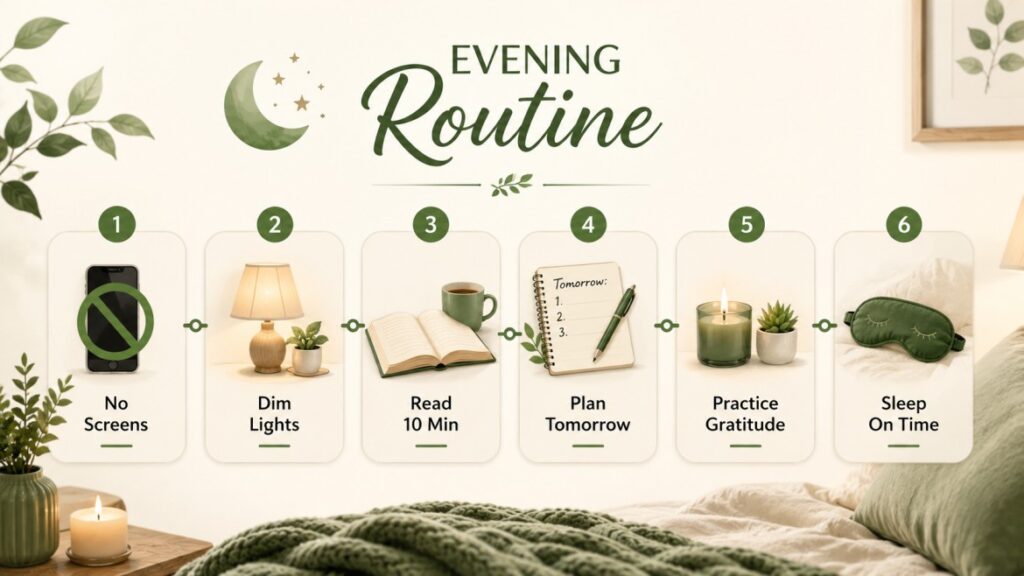
These simple actions can create a calm environment that encourages rest.
If you’re also working on nutrition habits, our article 10 Simple Healthy Eating Habits for Beginners explores everyday choices that support overall well-being.
Final Thoughts
Learning how to get better sleep tonight starts with simple, realistic habits.
You don’t need a perfect routine.
You don’t need expensive products.
You don’t need to overhaul your life overnight.
Instead, focus on one small improvement. Perhaps it’s reducing screen time before bed. Maybe it’s setting a consistent bedtime or creating a relaxing evening routine.
Small changes practiced consistently often have the greatest impact.
Better sleep is not about perfection. It’s about creating an environment and routine that help you feel rested, refreshed, and ready for the day ahead.
FAQs
Q1. What is the fastest way to improve sleep tonight?
Creating a relaxing bedtime routine, reducing screen time, and maintaining a consistent sleep schedule can help support better sleep.
Q2. How many hours of sleep do adults generally need?
Sleep needs vary, but many adults benefit from around seven to nine hours of sleep per night.
Q3. Does using a phone before bed affect sleep?
For some people, screen exposure before bedtime may make it harder to relax and fall asleep.
Q4. Can exercise help improve sleep quality?
Regular physical activity may support better sleep when included as part of a healthy lifestyle.
Q5. What should I avoid before bed?
Large meals, excessive caffeine, and stimulating activities close to bedtime may make sleep more difficult for some people.
Q6. Is it okay to take naps during the day?
Short naps can be helpful, but very long naps late in the day may affect nighttime sleep.
Q7. How long does it take to improve sleep habits?
Improvement varies from person to person, but consistent healthy sleep habits often become more effective over time.