
10 Simple Healthy Eating Habits for Beginners
Have you ever promised yourself that you would start eating healthier, only to feel overwhelmed by complicated diets, conflicting advice, and unrealistic expectations?
You’re not alone. Many people want to improve their health but don’t know where to begin. The good news is that healthy eating doesn’t have to be perfect, expensive, or restrictive. In my experience, the most successful changes come from small habits that fit naturally into everyday life.
Many families go through this, and you’re not alone.
The truth is that healthy eating habits for beginners are often surprisingly simple. Instead of focusing on drastic changes, it’s better to build a foundation of sustainable habits that support your long-term well-being.
Whether you’re looking to improve your energy, support your overall health, or simply feel better day to day, these practical habits can help you get started.
Why Healthy Eating Is About Progress, Not Perfection
One of the biggest misconceptions about nutrition is that healthy eating requires perfection.
Many people start with strict rules, eliminate their favorite foods, and try to overhaul their entire lifestyle overnight. Unfortunately, this approach often leads to frustration and burnout.
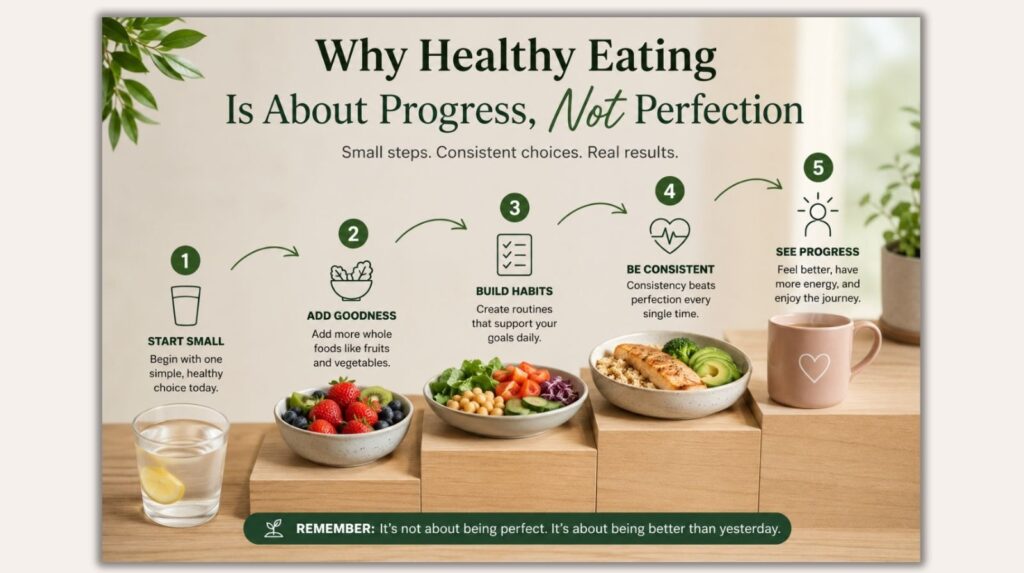
Healthy eating is more about consistency than perfection. Small choices made regularly can have a meaningful impact over time.
If you’re beginning your wellness journey, our Health Wellness Hub provides additional guidance on building sustainable healthy habits.
According to the World Health Organization’s healthy diet recommendations, balanced eating patterns play an important role in supporting overall health and well-being.
1. Start Your Day with a Balanced Breakfast
Breakfast doesn’t need to be elaborate.
A simple meal that includes protein, fiber, and healthy carbohydrates can help you feel satisfied and energized.
For example, oatmeal with fruit, yogurt with nuts, or whole-grain toast with eggs can provide a balanced start to the day.
2. Drink More Water Throughout the Day
Hydration is often overlooked when people focus on nutrition.
Many times, what feels like hunger may simply be thirst. Keeping a water bottle nearby can make it easier to stay hydrated.
If you’re interested in hydration, you may also enjoy our upcoming article on How Much Water Should You Drink Daily?
3. Fill Half Your Plate with Fruits and Vegetables
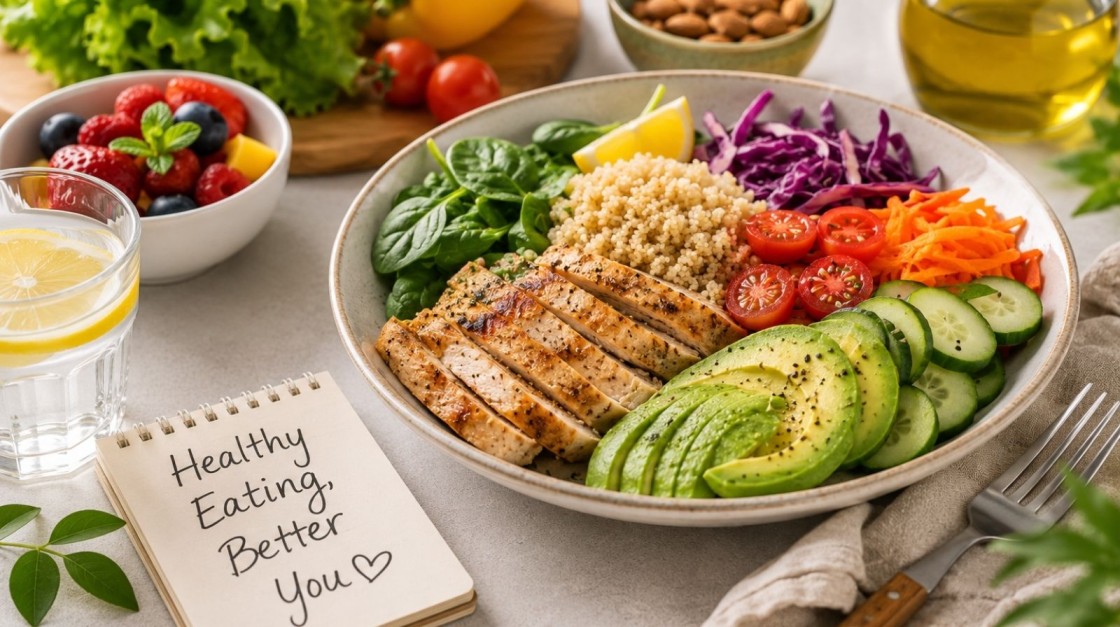
One practical strategy is to focus on adding nutritious foods rather than constantly restricting foods.
Aim to include colorful fruits and vegetables at most meals whenever possible.
They provide vitamins, minerals, fiber, and variety while helping create balanced meals.
4. Eat Slowly and Mindfully
In today’s busy world, many meals happen in front of screens, during meetings, or while rushing between responsibilities.
Eating more slowly allows you to enjoy your food and become more aware of hunger and fullness signals.
Even taking a few extra minutes can make meals feel more satisfying.
5. Choose Whole Foods More Often
Whole foods are foods that are closer to their natural state.
Examples include fruits, vegetables, legumes, nuts, seeds, whole grains, fish, eggs, and minimally processed foods.
This doesn’t mean avoiding all processed foods. It simply means making whole foods the foundation of your eating pattern whenever practical.
6. Include Protein with Every Meal
Protein can help support satiety and provide important nutrients.
Good sources include beans, lentils, eggs, yogurt, poultry, fish, tofu, and nuts.
Adding protein to meals may help reduce the urge to snack excessively between meals.
7. Plan Simple Meals Ahead of Time
One habit that many healthy eaters share is planning.
You don’t need a detailed meal plan for every day of the week.
Even identifying a few healthy meal options before the week begins can reduce stress and make nutritious choices easier when life gets busy.
8. Keep Healthy Snacks Available
When hunger strikes unexpectedly, convenience often wins.
Keeping healthy snacks nearby can make better choices easier.
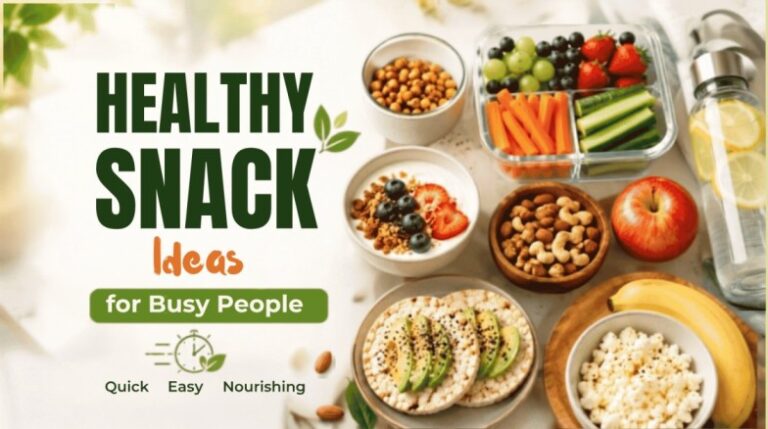
Fresh fruit, yogurt, nuts, seeds, or cut vegetables are simple examples that require little preparation.
If you’re looking for ideas, watch for our upcoming guide on Healthy Snacks for Busy People.
9. Pay Attention to Portion Sizes
Healthy foods can be part of a balanced lifestyle, but portions still matter.
Rather than measuring every bite, focus on eating until comfortably satisfied rather than overly full.
Learning to recognize your body’s signals takes practice, and that’s perfectly normal.
10. Focus on Long-Term Habits
Perhaps the most important habit is developing a long-term perspective.
There will be holidays, celebrations, vacations, and occasional indulgences. That’s part of life.
A single meal doesn’t define your health, just as one healthy meal doesn’t transform it overnight.
What matters most is the pattern you create over weeks, months, and years.
Common Mistakes to Avoid
Many beginners unknowingly make healthy eating more difficult than it needs to be.
One common mistake is trying to change everything at once. Drastic changes often feel overwhelming and difficult to maintain.
Another mistake is labeling foods as completely “good” or “bad.” This mindset can create unnecessary guilt and make healthy eating feel restrictive.
Finally, avoid comparing your eating habits to what you see on social media. Every person’s lifestyle, preferences, and nutritional needs are different.
The best approach is the one that works consistently for you.
Building Healthy Eating Habits One Step at a Time
Imagine someone deciding to improve their health after years of rushed meals and takeout dinners.
Instead of following an extreme diet, they begin by drinking more water, adding vegetables to lunch, and planning healthier breakfasts.
After a few weeks, those habits become normal. Then they add another healthy habit.
This gradual approach often feels more manageable and sustainable than trying to transform everything immediately.
Healthy eating isn’t about being perfect. It’s about creating a lifestyle that supports your well-being while still allowing flexibility and enjoyment.
Final Thoughts
Building healthy eating habits for beginners doesn’t require complicated rules or expensive meal plans.
The most effective changes are often the simplest ones: drinking more water, eating more fruits and vegetables, planning ahead, and focusing on consistency rather than perfection.
Start with one habit from this list today.
Once it becomes part of your routine, add another.
Small steps taken consistently can create meaningful progress toward a healthier, more balanced life.
FAQ Section
Q1. What are the best healthy eating habits for beginners?
Start with simple habits such as drinking more water, eating more fruits and vegetables, including protein at meals, and planning meals ahead.
Q2. How can I start eating healthier without dieting?
Focus on adding nutritious foods rather than restricting foods. Small sustainable changes are often easier to maintain than strict diets.
Q3. How long does it take to build healthy eating habits?
The timeline varies for each person, but consistency and gradual changes tend to support long-term success.
Q4. Is it okay to eat treats while trying to eat healthy?
Yes. Healthy eating is about overall patterns and balance, not perfection. Occasional treats can fit within a healthy lifestyle.
Q5. Why is drinking water important for healthy eating?
Proper hydration supports overall wellness and may help people better recognize hunger and fullness cues.
Q6. What foods should beginners focus on eating more often?
Fruits, vegetables, whole grains, legumes, lean proteins, nuts, seeds, and minimally processed foods are excellent choices.
Q7. What is the biggest mistake beginners make with healthy eating?
Trying to change everything at once is one of the most common mistakes. Starting small and building habits gradually is often more sustainable.