
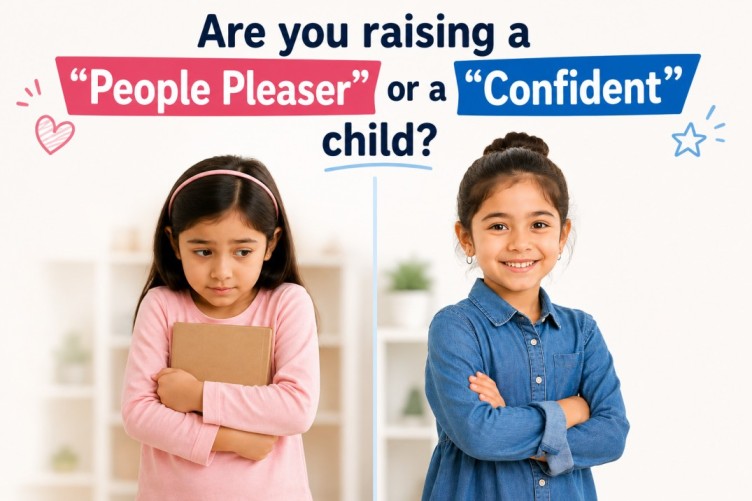
Are you raising a people pleaser?
As parents, most of us want our children to grow into “good kids.”
We teach them to share, obey, help others, and be kind.
But in today’s world, being only good is not always enough.
Children also need wisdom — the ability to think, understand situations, set boundaries, and make smart choices.
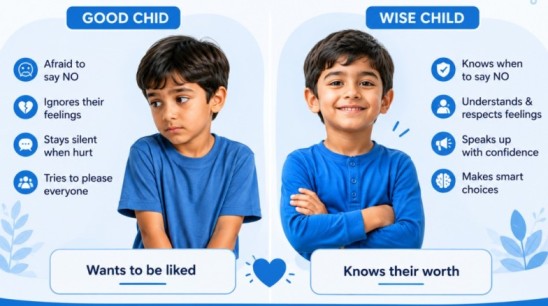
A good child may say “yes” to everyone.
A wise child knows when to say “no.”
A good child may stay silent to avoid hurting someone.
A wise child knows when speaking up is necessary.
Teaching children the balance between kindness and wisdom helps them become emotionally strong, confident, and safe.
What Does “Being Good” Mean?
Being good usually means:
- Being kind
- Sharing with others
- Following rules
- Respecting elders
- Helping people
These values are important and beautiful. They help children become caring human beings.
But sometimes children misunderstand “being good” as:
- Always pleasing others
- Never disagreeing
- Ignoring their own feelings
- Allowing others to treat them badly
And that can become harmful over time.
What Does “Being Wise” Mean?
Being wise means:
- Thinking before acting
- Understanding right and wrong deeply
- Recognizing unsafe situations
- Setting healthy boundaries
- Making decisions with both heart and mind
Wisdom teaches children that kindness should never come at the cost of self-respect or safety.
A Simple Example Children Understand
Imagine another child keeps taking your child’s toys without asking.
A “good” child may stay quiet because they don’t want to seem rude.
But a “wise” child politely says:
“I’m happy to share, but please ask before taking my things.”
That is not disrespectful.
That is confidence with kindness.
Why This Lesson Matters Today
Many children grow up believing they must always be “nice” to be loved or accepted.
As a result, they may:
- Struggle to say no
- Fear disappointing others
- Become easy to manipulate
- Ignore their own emotions
Teaching wisdom helps children:
- Protect themselves
- Build confidence
- Develop critical thinking
- Handle peer pressure better
- Create healthy relationships
How Parents Can Teach This Difference
1. Teach Boundaries Early
Let children know it’s okay to say:
- “I don’t like that.”
- “Please stop.”
- “I need some space.”
2. Encourage Questions
Wise children don’t blindly obey everything.
Teach them to ask:
- “Why is this important?”
- “Is this safe?”
- “Does this feel right?”
3. Praise Smart Decisions, Not Just Obedience
Instead of only saying:
“Good boy” or “Good girl”
Also say:
“That was a thoughtful choice.”
“You handled that wisely.”
4. Be Their Example
Children learn more from what parents do than what parents say.
Show them how to:
- Be kind without being weak
- Stay calm under pressure
- Speak respectfully while standing firm
The Goal Is Balance
We do not want children who are rude, selfish, or careless.
But we also do not want children who sacrifice themselves just to please everyone.
The goal is to raise children who are:
- Kind but confident
- Caring but careful
- Respectful but strong
- Good-hearted and wise-minded
Because in life, kindness opens doors — but wisdom protects the child walking through them.
Final Thought
Teach your child that being good is beautiful.
But being wise helps them survive and thrive in the real world.
A kind heart is important.
But a wise mind will guide that heart in the right direction.